Singapore Universities Analysis
Project Overview
The dataset contains data regarding graduate employment outcomes, salaries, and related metrics. The goal was to critique the dataset, model its structure, implement it as a MySQL database, and create a simple Node.js-based web application to query and display insights from the data.
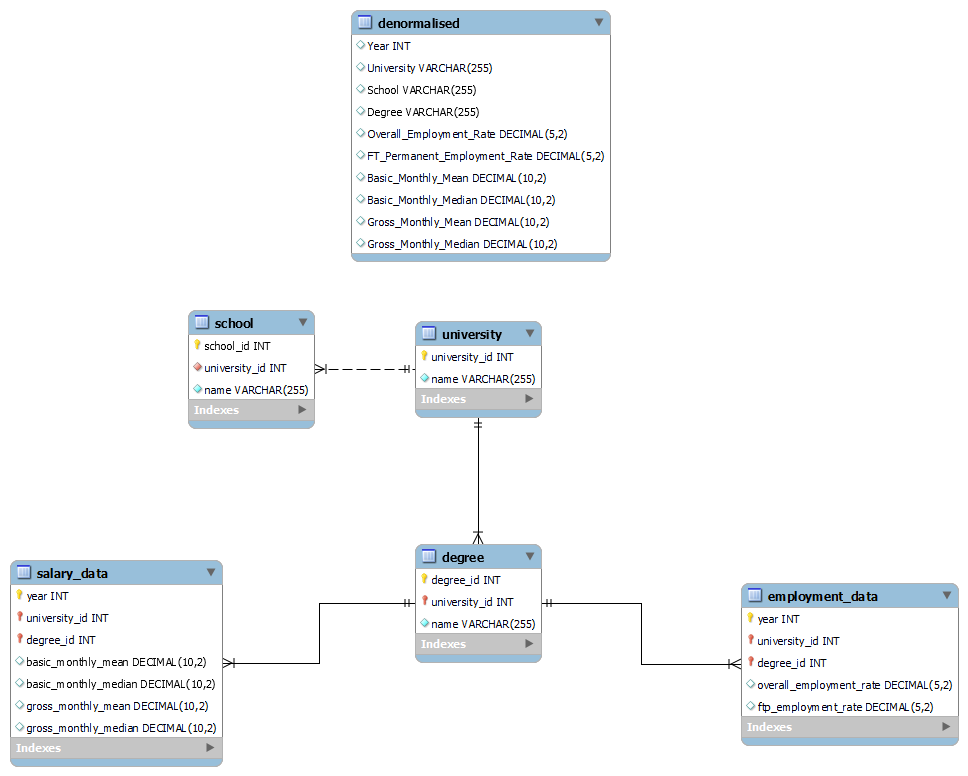
Key Project Stages
- Dataset Analysis and Critique:
- Dataset: GES dataset of Singapore universities.
- Critique:
- Examined the dataset for completeness, consistency, and relevance.
- Identified data fields such as university names, courses, employment rates, median salaries, and job types.
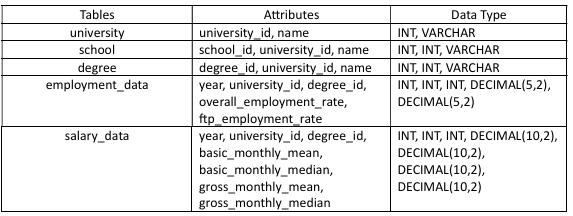
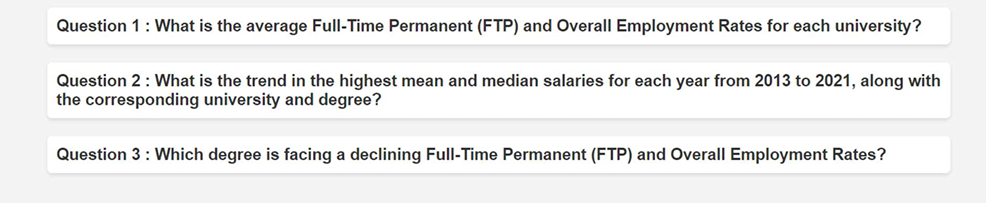
- Questions Formulated:
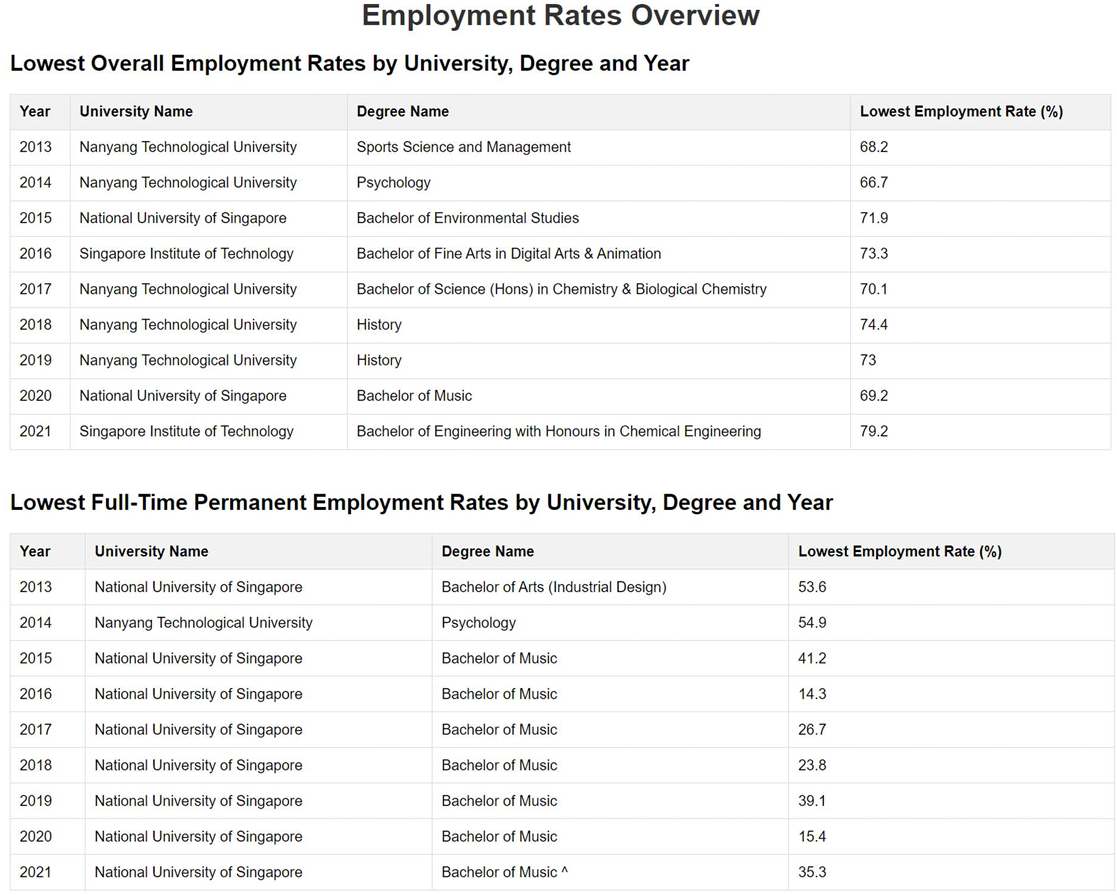
- What is the average Full-Time Permanent (FTP) and Overall Employment Rates for each university?
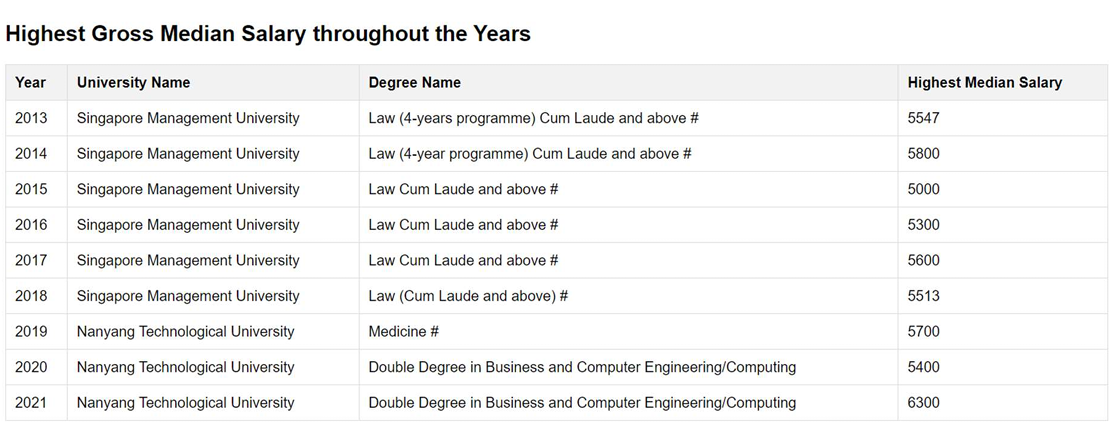
- What is the trend in the highest mean and median salaries for each year from 2013 to 2021, along with the corresponding university and degree?
- Which degree is facing a declining Full-Time Permanent (FTP) and Overall Employment Rates?
- E/R Model Creation:
- Entity-Relationship Model:
- Modeled entities such as Universities, Courses, Graduates, and Employment Outcomes.
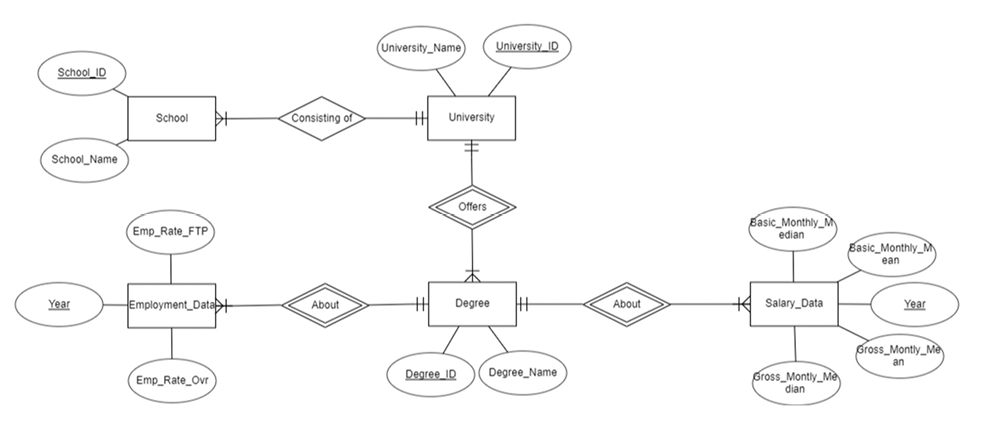
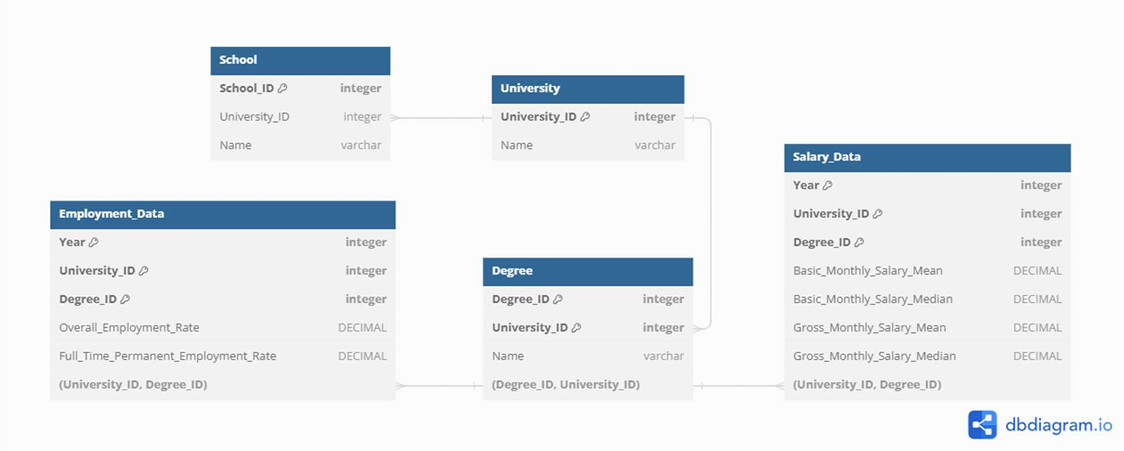
- Defined relationships, such as:
- “Universities offer Courses.”
- “Graduates complete Courses.”
- “Graduates have Employment Outcomes.”
- Adjusted for relational database implementation:
- Normalized the design to reduce redundancy.
- Incorporated primary and foreign keys for all relationships.
- Entity-Relationship Model:
- MySQL Database Implementation:
- Built a relational database in MySQL based on the E/R model.
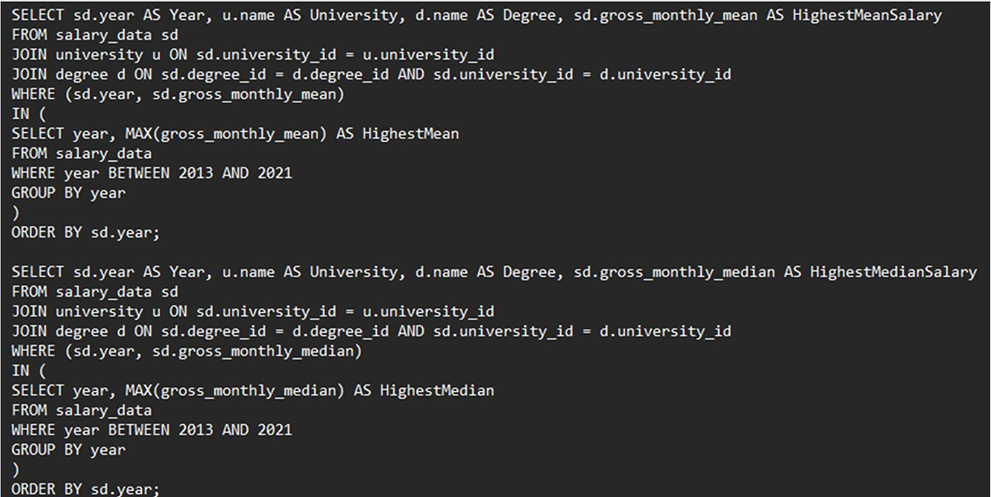
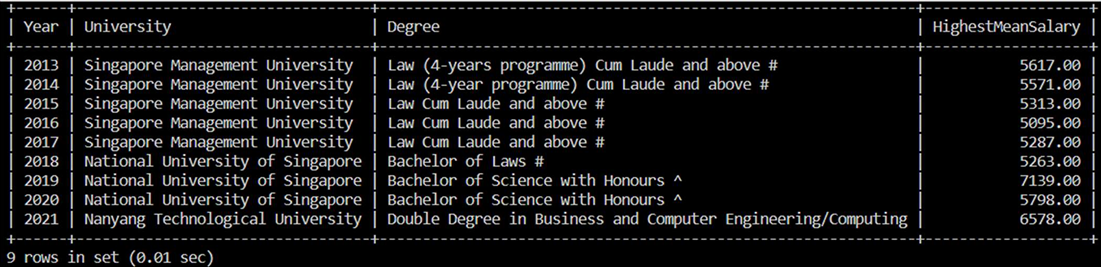
- Populated the database with sufficient data to ensure:
- All tables had meaningful entries.
- Relationships were demonstrated through multiple queries.
- Data Populated:
- Universities: Names, types (public/private).
- Courses: Names, fields, and associated universities.
- Employment Outcomes: Salaries, job types, and rates.
- Web Application Development:
- Built a simple Node.js-based web application to interact with the MySQL database.
- Implemented functionalities to:
- Display lists of universities and courses.
- Query employment outcomes and salaries.
- Answer formulated questions dynamically (e.g., “Which courses offer the highest mean salaries?”).

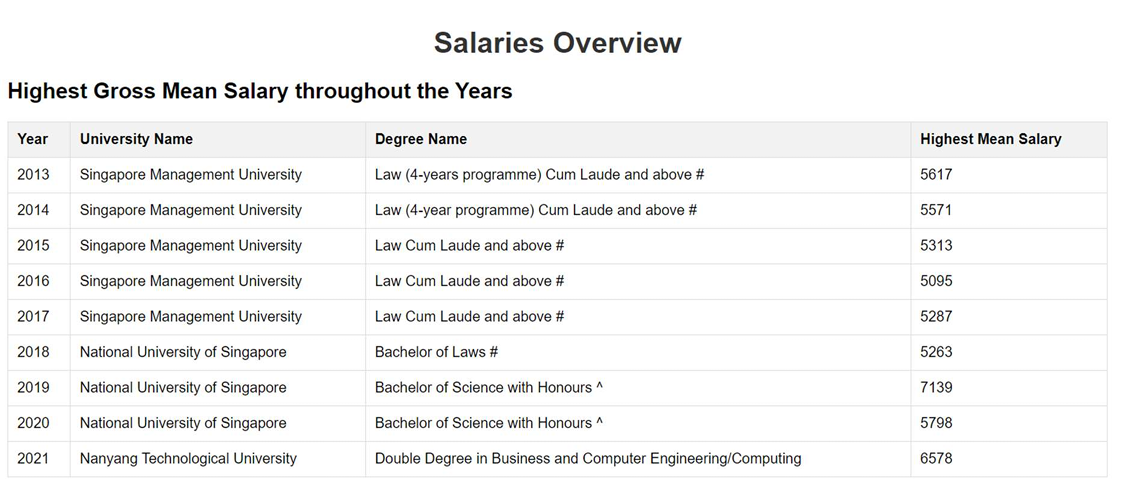
- Technologies Used:
- Node.js for server-side scripting.
- MySQL as the backend database.
- Basic HTML/CSS/JavaScript for the user interface.
Deliverables
- Report:
- Critique of the dataset.
- E/R diagrams illustrating the database structure.
- Queries demonstrating answers to key questions.
- MySQL Database:
- Populated with GES data.
- Normalized and optimized for queries.
- Node.js Web Application:
- Accessible via a shareable link to a lab environment.
- Interface designed to display and query GES data.
- Dataset Source URL:
- Provided a link to the original dataset for verification and replication.
Project Outcomes
This project successfully demonstrated the ability to analyze a dataset, model it using E/R diagrams, implement a relational database, and develop a web application to query and visualize data. It highlights a strong understanding of database design, web development, and the practical application of data analysis to answer real-world questions.